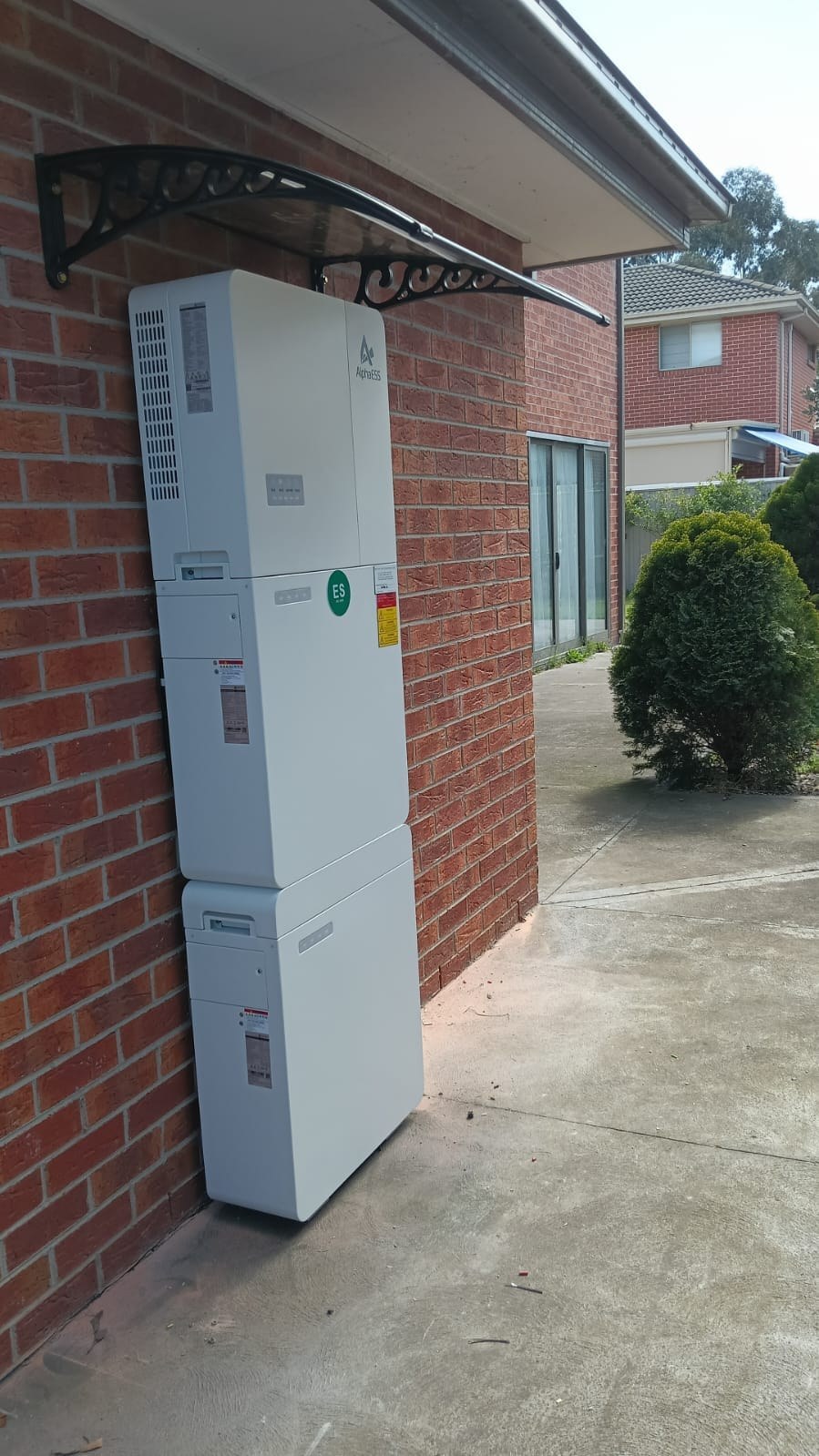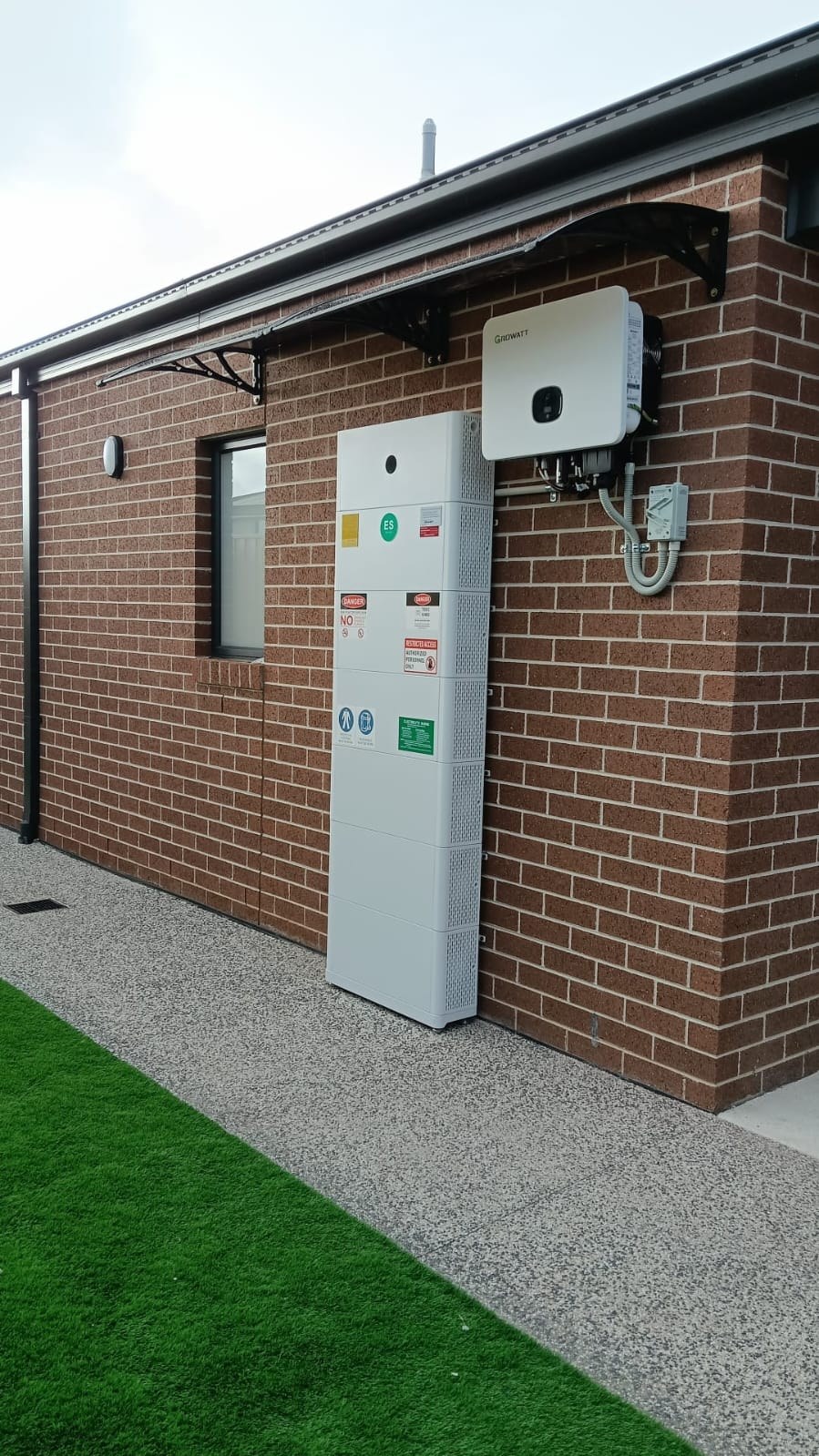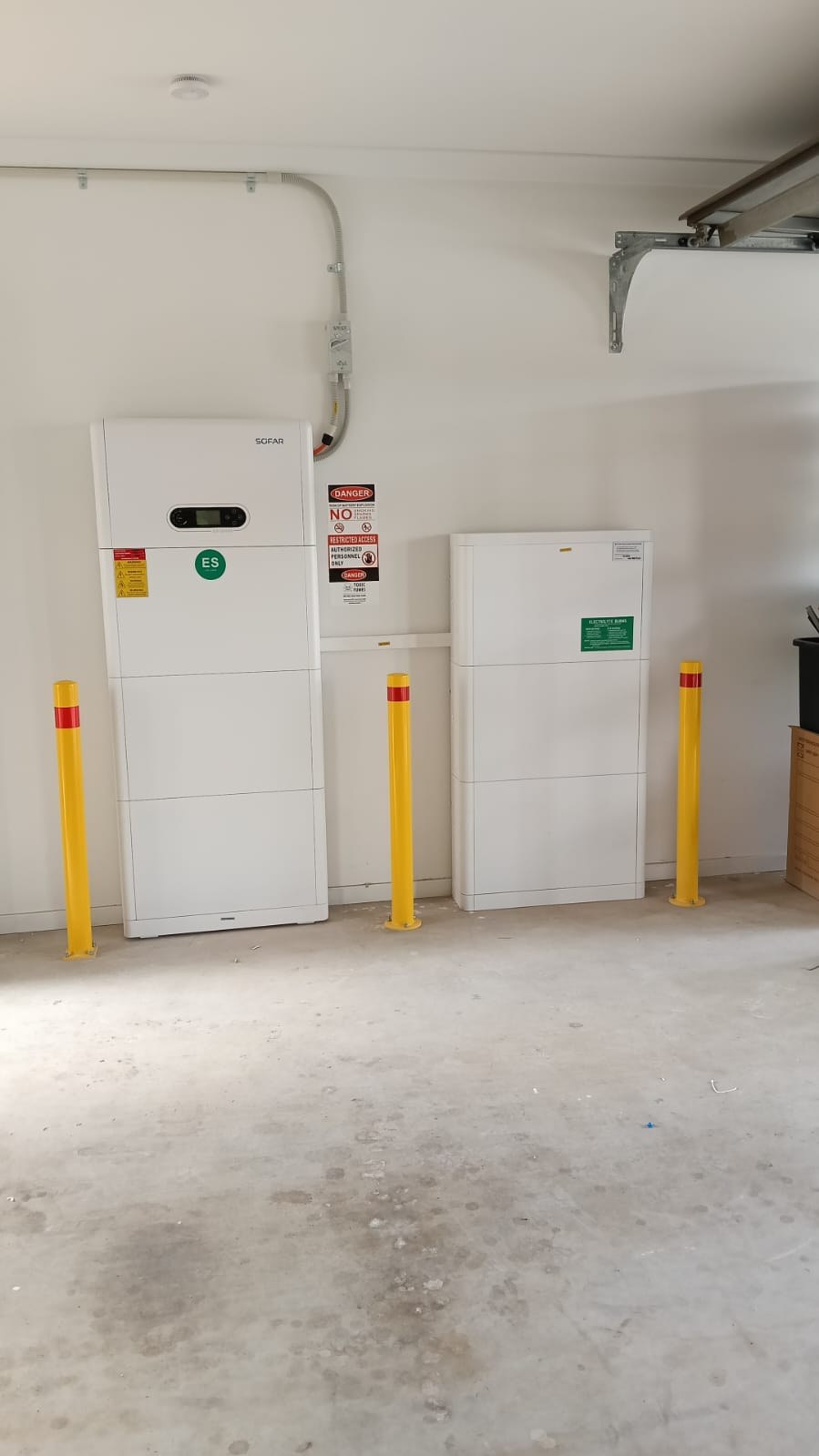

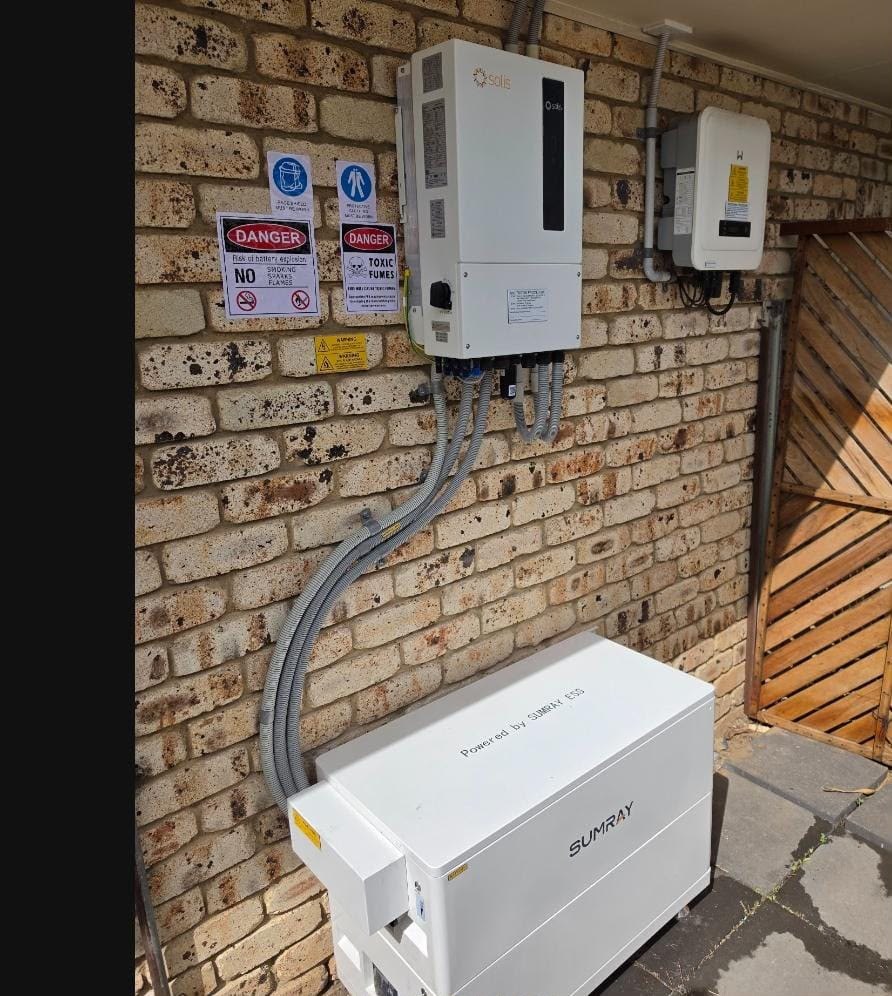
Point Cook Estate 13.2kW N-Type array and dual AlphaESS 14kWh storage stacks operating with sub-10ms automatic UPS transfer.
- ✓ A 42-square double-storey concrete tile home in Point Cook consuming 28 kWh/day achieved 94.2% annual grid self-sufficiency.
- ✓ Split East/West solar array orientation flattened the production curve, delivering high morning solar for breakfasts and evening power for cooking without grid imports.
- ✓ 28kWh of high-voltage modular battery storage seamlessly handled a 7-hour suburban blackout during the November 2025 storms without a single light flicker.
- ✓ Annual electricity costs plunged from $3,480 down to an annual credit balance of -$140 via intelligent wholesale tariff export arbitrage.
1. Customer Energy Profile & Household Baseline
In November 2024, the Sharma family approached Voltz Energy with a common suburban dilemma. They lived in a sprawling 42-square double-storey residence in the Alamanda Estate in Point Cook, Victoria. With two home offices, ducted reverse-cycle climate control, an electric vehicle, and three school-age children, their average electricity consumption hovered at 26 to 34 kWh per day.
Their quarterly electricity bills exceeded $900 in spring and pushed past $1,400 in peak summer. Furthermore, suburban feeder instability in their growth corridor caused repeated voltage fluctuations and intermittent blackout events.
Their mandate: Eliminate retail power bills permanently, ensure uninterrupted sub-10ms whole-home blackout protection, and maximize point-of-sale Victorian solar and battery incentives.
2. Roof Geometry & East/West Split Array Engineering
A classic mistake in suburban solar design is forcing all panels onto a North-facing roof. While North delivers the highest instantaneous peak at midday, a working family is rarely home at 1:00 PM to consume that power. The energy is exported for an insulting 3.3c/kWh feed-in tariff, only for the family to buy it back at 34c/kWh at 6:30 PM.
- Eastern Array (14 Panels / 6.16 kW): Captures early morning sunlight from 6:30 AM to 11:30 AM, powering breakfast appliances and pre-charging the battery.
- Western Array (16 Panels / 7.04 kW): Generates sustained power from 1:00 PM to 7:45 PM in summer, offsetting the massive afternoon heatwave air conditioning surge.
- Panel Hardware: 30× JinkoSolar Tiger Neo N-Type 440W All-Black TOPCon modules mounted on Clenergy tile roof bracketry with concealed DC conduit runs.
3. 12-Month Monitored Telemetry & Autonomy Stats
| Month | Solar Generation | Home Consumption | Grid Import | Grid Autonomy % |
|---|---|---|---|---|
| January (Peak Summer) | 1,840 kWh | 980 kWh | 12 kWh | 98.8% |
| April (Autumn) | 1,120 kWh | 840 kWh | 34 kWh | 96.0% |
| July (Mid-Winter) | 590 kWh | 890 kWh | 310 kWh | 65.2% |
| October (Spring) | 1,480 kWh | 790 kWh | 18 kWh | 97.7% |
| 12-MONTH TOTAL | 15,420 kWh | 10,640 kWh | 620 kWh | 94.2% AUTONOMY |
4. Switchboard Reconstruction & Three-Phase Balancing
Because the residence operated on a three-phase electricity connection, installing battery backup required complete switchboard re-engineering. Budget installers often place a single-phase battery on Phase 1, leaving heavy air conditioning on Phase 2 unprotected during blackouts.
Voltz Energy reconstructed the main distribution board with:
- Three-Phase Automatic Transfer Switch (ATS): Sub-10 millisecond optical transition guaranteeing uninterrupted power to server racks and desktop computers.
- RCBO Type-A Circuit Protection: Replacing outdated ceramic fuses with individual safety switches for all 18 light and power sub-circuits.
- Dual High-Voltage Storage Stacks: 2× AlphaESS 14kWh modular towers (28kWh total) connected in parallel to an 8kW three-phase hybrid inverter with independent phase load balancing.
5. Winter Resilience: Managing Gloomy Victorian July Days
The true acid test of any off-grid or hybrid residential microgrid is Melbourne in July. Across 31 days of winter rain and overcast skies, rooftop generation naturally drops.
To overcome this, the Sharma family's smart inverter gateway was programmed with Off-Peak Tariff Arbitrage. When weather forecasting APIs predict two consecutive days of heavy cloud cover, the battery automatically trickle-charges from the grid between 1:00 AM and 5:00 AM at the ultra-cheap off-peak tariff of 14c/kWh. The stored cheap energy is then discharged during the expensive 38c/kWh afternoon peak, completely sheltering the household from high bills.
Frequently Asked Questions
Q: Did the roof tile warranty stay intact?
Yes. Voltz Energy utilizes precision tile brackets that do not require grinding or cutting the water-channel edges of concrete roof tiles. All penetrations are flashed with high-grade UV-stable Dektite boots.
Q: How long does an installation like this take?
A full 13kW solar and 28kWh battery installation with switchboard rebuild is completed in 2 consecutive days by our in-house team of 4 licensed electricians and apprentices.
Q: What rebates did this Point Cook customer receive?
The customer received $3,800 in Federal STC deductions and an additional interest-free Solar Victoria battery loan, drastically reducing upfront capital outlay.
Voltz Energy Engineering Directorate
GEELONG LABEvery audit published by Voltz Energy is authored by licensed electricians, CEC-accredited solar and storage designers, and certified HVAC refrigeration mechanics. We do not accept sponsored content or third-party paid product placements.