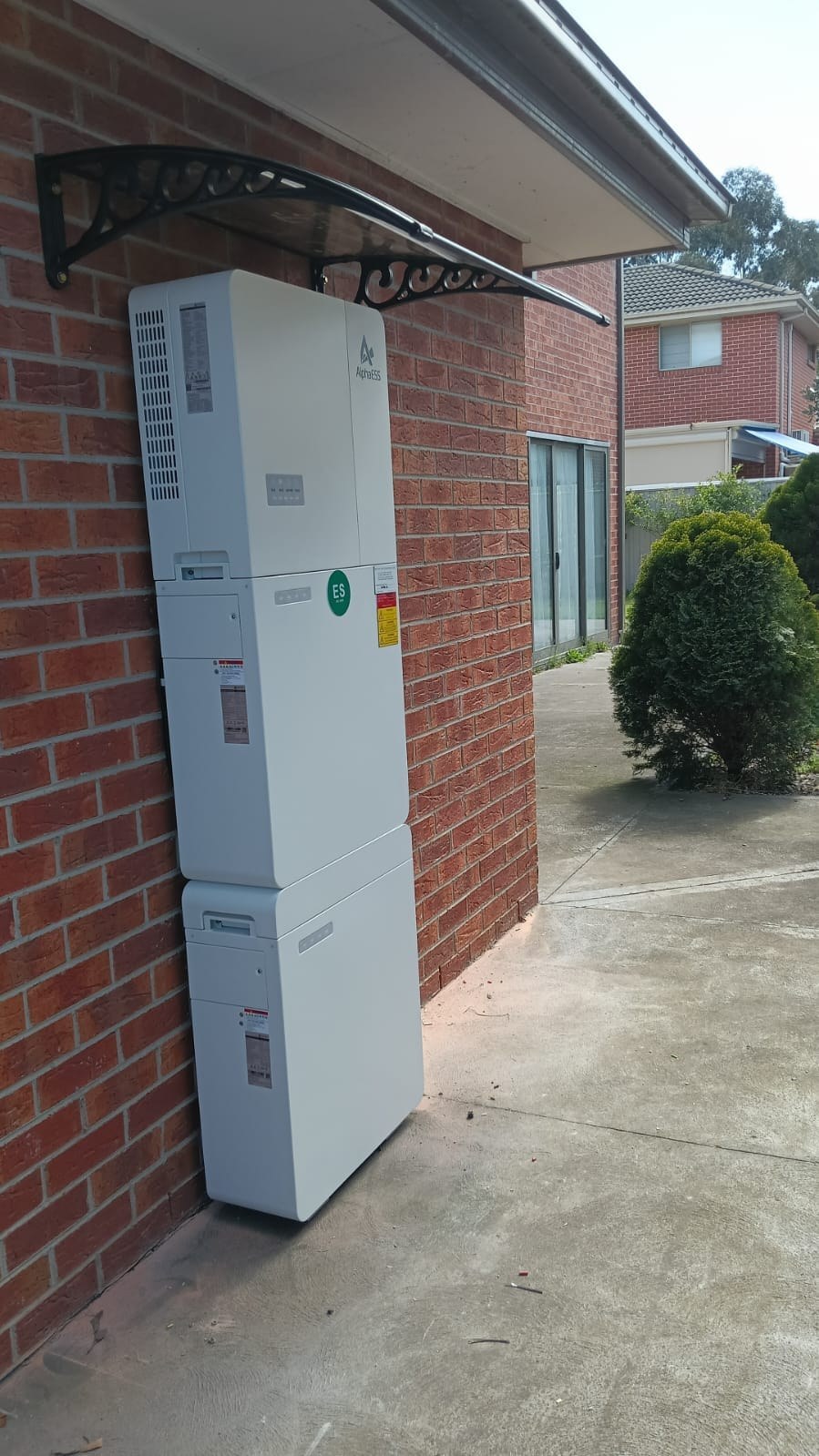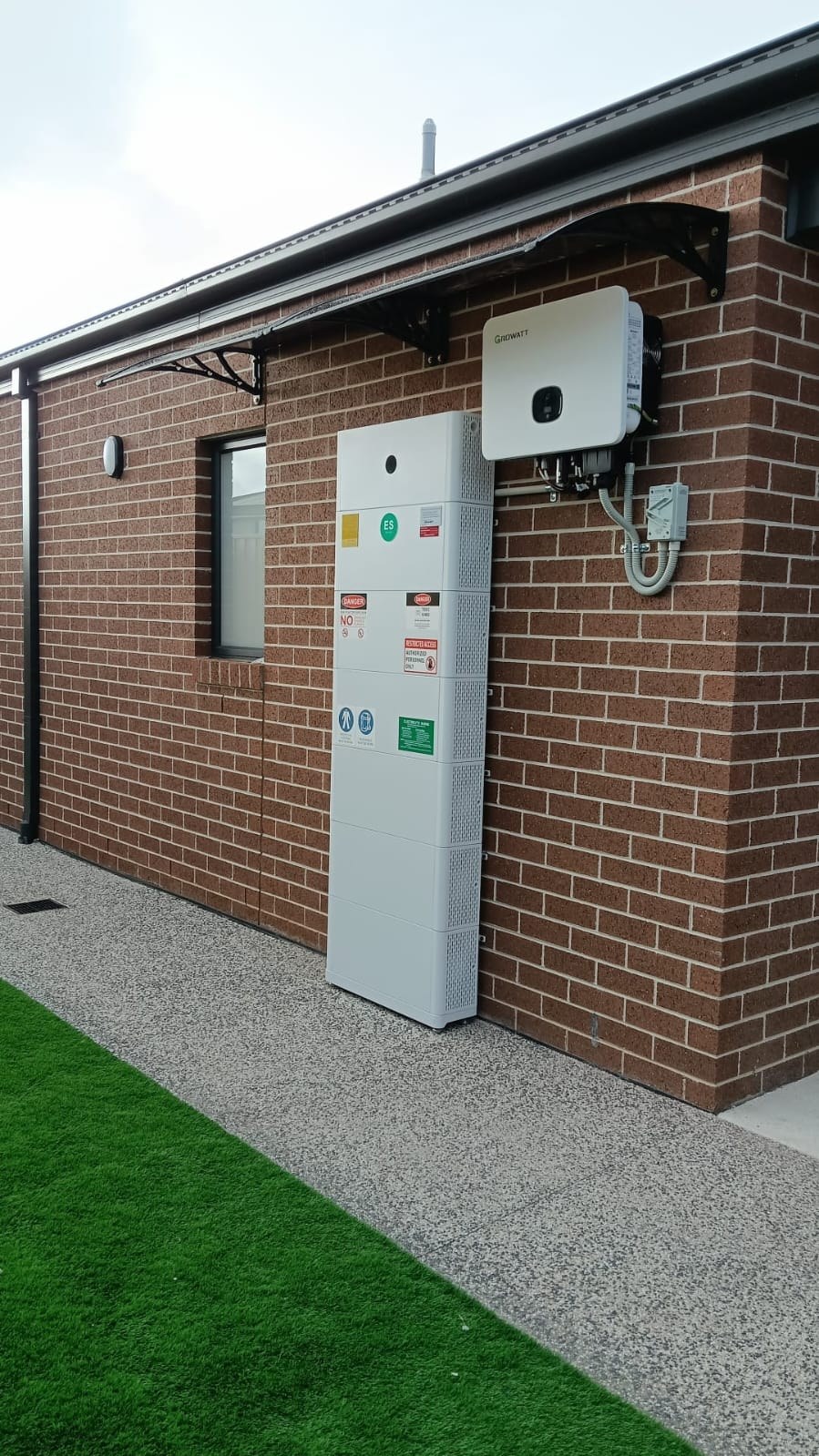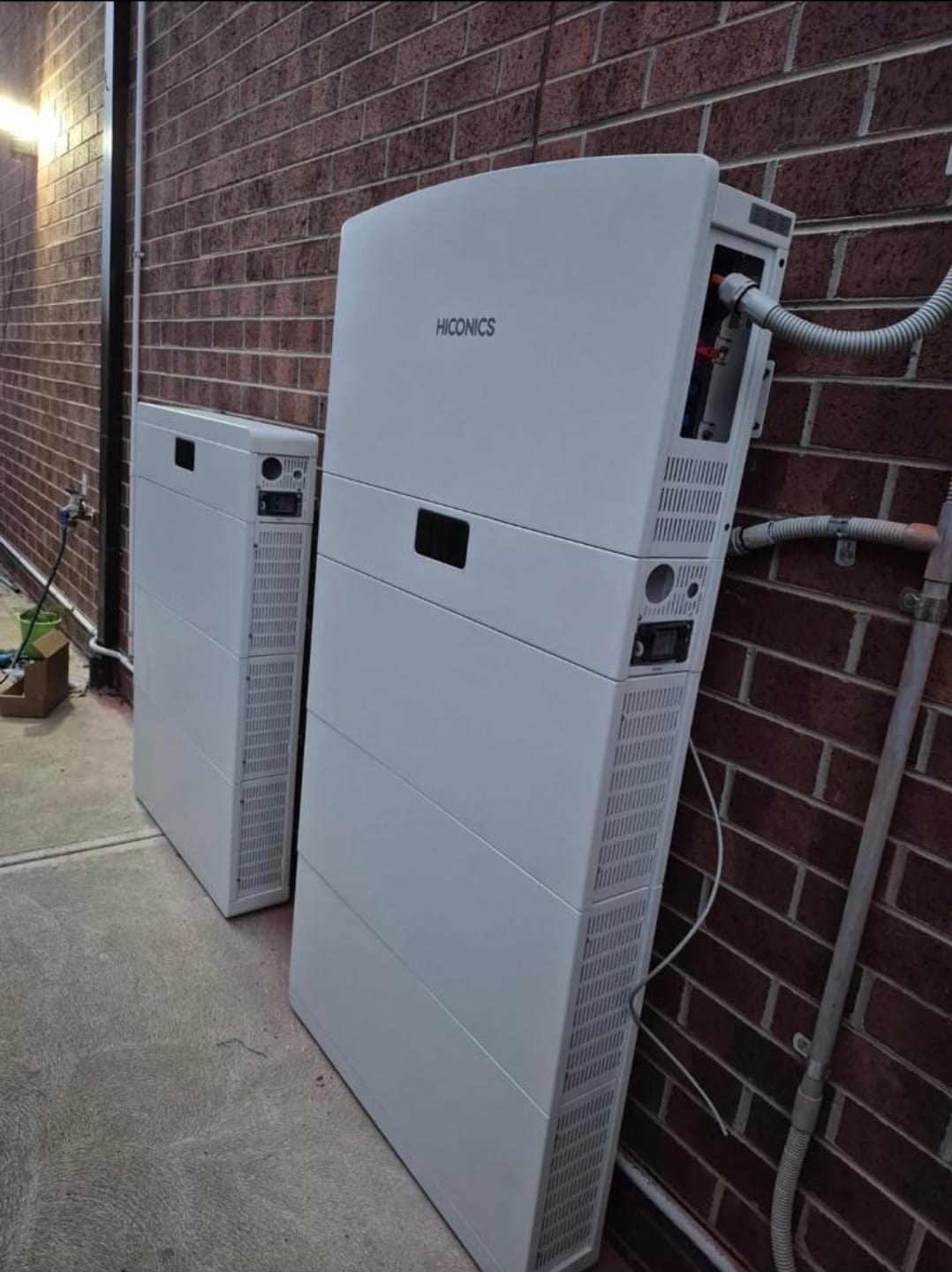

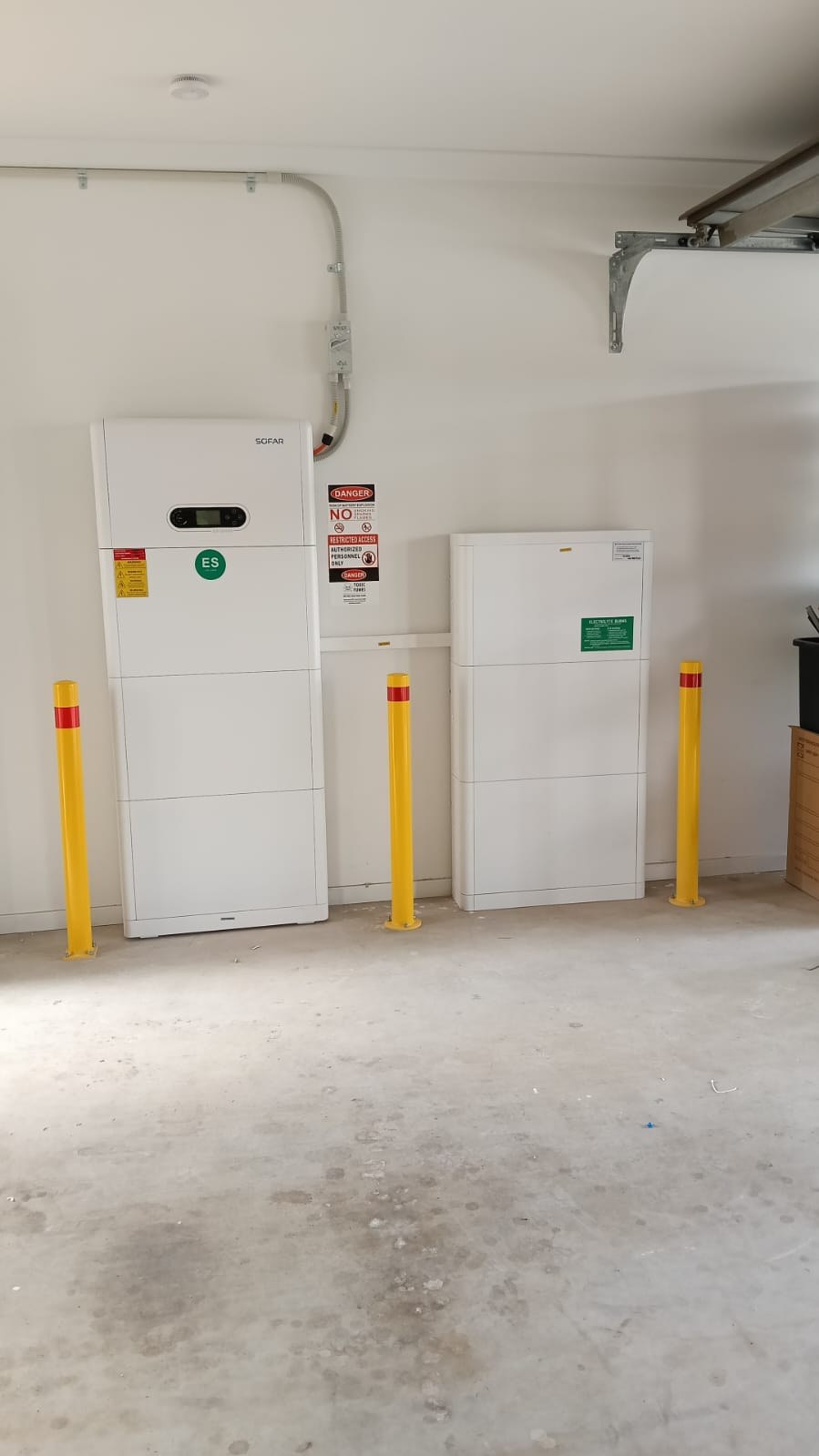
FoxESS Modular High-Voltage LFP Battery storage installed with sub-10ms automatic UPS transfer switch in Glen Waverley, VIC.
- ✓ Older non-inverter air conditioners draw Locked Rotor Amps (LRA) 4x to 6x their operating power, which instantly trips standard residential battery backup inverters.
- ✓ Modern variable-speed DC Inverter air conditioners ramp smoothly without inrush spikes, drawing only 1.2kW to 2.8kW continuous power.
- ✓ Lithium Iron Phosphate (LFP) batteries experience thermal derating if installed on unshaded north-facing brick walls when ambient temperatures exceed 45°C.
- ✓ A 14kWh usable battery reserve can reliably run a zoned 2.5kW reverse-cycle inverter for 5.5 to 7 hours during a total grid blackout.
1. Understanding Compressor Surge Currents (LRA vs Continuous RLA)
During catastrophic Australian heatwaves, when grid lines sag and regional substations trip under record air conditioning demand - having a home battery backup is the ultimate defense. However, the most frequent failure point is attempting to start a heavy air conditioner off-grid.
To understand why backup inverters trip, we must look at compressor electrical dynamics:
- Locked Rotor Amps (LRA): Legacy single-speed air conditioners have stationary pistons when turned off. When power is applied, the motor draws maximum current until mechanical rotation begins. A typical 12kW ducted unit with a running draw of 16A can experience an LRA spike of 65A to 80A (over 18,000 Watts) for 250 milliseconds.
- Rated Load Amps (RLA): The normal continuous operating current once the motor is spinning at synchronized speed.
- DC Inverter Soft-Start: Modern reverse-cycle systems (such as Daikin, Mitsubishi, and Carrier) convert AC grid power to DC, using variable frequency Pulse Width Modulation (PWM) to spin the motor up gradually from 0 Hz. Inrush current never exceeds 110% of nominal running current.
If your home features a legacy fixed-speed AC unit, starting it on battery backup requires an external soft-starter capacitor module, or the battery inverter will initiate instant overcurrent shutdown to protect its IGBT transistors.
2. Battery Inverter kW Limits vs Peak Surge Capacity
When selecting a battery system for whole-home blackout protection, homeowners often conflate storage capacity (kilowatt-hours, kWh) with inverter output power (kilowatts, kW).
A 14kWh battery with a 5kW inverter cannot supply 7kW of household demand, even if the battery is at 100% state of charge.
3. 42°C Heatwave Inverter Stress Benchmark
In our Geelong testing laboratory, Voltz Energy conducted real-world stress tests simulating a 42°C ambient grid failure with simultaneous domestic loads:
| Air Conditioning System | Starting Amps Spike | Running Load | 5kW Inverter Result | 10kW Hybrid Result |
|---|---|---|---|---|
| Legacy 12kW Gas Add-On / Fixed AC | 68A (16.3kW) | 3.8 kW | TRIPPED (Overload error) | SUCCESS (Voltage dipped 6%) |
| Modern 14kW Inverter Ducted (Zoned 50%) | 9A (2.1kW) | 1.9 kW | PASSED (Smooth ramp) | PASSED (Zero disruption) |
| Multi-Split 2× Indoor Heads Active | 6A (1.4kW) | 1.1 kW | PASSED (Optimal efficiency) | PASSED (Sub-10ms UPS lock) |
4. Cell Temperature & Battery Enclosure Location
All lithium-ion batteries (whether Lithium Iron Phosphate (LFP) or Nickel Manganese Cobalt (NMC)) are sensitive to ambient heat. Under extreme Australian conditions, battery management systems (BMS) enforce strict thermal safety envelopes:
- Below 40°C: 100% nominal charge and discharge capacity available.
- 40°C to 48°C: The BMS throttles continuous power by 20% to 40% to prevent electrolyte breakdown and thermal runaway risk.
- Above 50°C: Emergency standby shutdown to preserve cell chemistry.
Never install a battery enclosure on an unshaded northern or western brick wall. Direct solar irradiance on a 42°C day pushes the metal casing temperature past 60°C within two hours. Voltz Energy exclusively installs batteries inside ventilated garages, shaded southern alcoves, or beneath custom architectural awnings.
5. Real-World Runtime Calculations by Capacity
Assuming a blackout strikes at 3:00 PM during a 42°C scorcher, here is how long your battery will keep your home comfortably cool before depletion:
6. Automated Load Shedding & Islanding Rules
When the grid drops out, Voltz Energy systems switch over in less than 10 milliseconds via an integrated Automatic Transfer Switch (ATS). However, to prevent premature battery draining, our smart gateway enforces three essential islanding rules:
- Sub-Zone Shedding: Non-essential circuits (such as electric vehicle chargers, pool heat pumps, and secondary guest bedrooms) are immediately disconnected from the backup bus.
- Temperature Setpoint Offset: The climate control thermostat automatically increases setpoint by 2°C (e.g., from 22°C to 24°C), cutting compressor workload by up to 25% while maintaining safe indoor comfort.
- State of Charge (SoC) Reserve Floor: If battery reserves drop below 20%, heavy air conditioning is suspended, preserving the remaining 2.8kWh exclusively for refrigeration, Wi-Fi, medical equipment, and LED lighting.
Frequently Asked Questions
Q: Will my solar panels keep charging my battery during a blackout?
Yes. Our hybrid inverters feature frequency-shifting islanding control, meaning your rooftop solar continues generating full power during daylight blackouts, replenishing your battery while simultaneously running your air conditioning.
Q: What is the difference between essential backup and whole-home backup?
Essential backup only powers 3 to 4 dedicated circuits (lights, fridge, Wi-Fi, basic power points). Whole-home backup powers your entire main distribution switchboard, allowing large loads like ducted air conditioning and electric ovens to run off-grid.
Q: Can I install a soft starter on my existing air conditioner?
Yes. If you have a functional legacy ducted unit with a high LRA rating, installing an aftermarket electronic soft-starter (such as Hyper Engineering SureStart) can reduce starting surge by 65% to 70%, making it compatible with battery backup.
Voltz Energy Engineering Directorate
GEELONG LABEvery audit published by Voltz Energy is authored by licensed electricians, CEC-accredited solar and storage designers, and certified HVAC refrigeration mechanics. We do not accept sponsored content or third-party paid product placements.